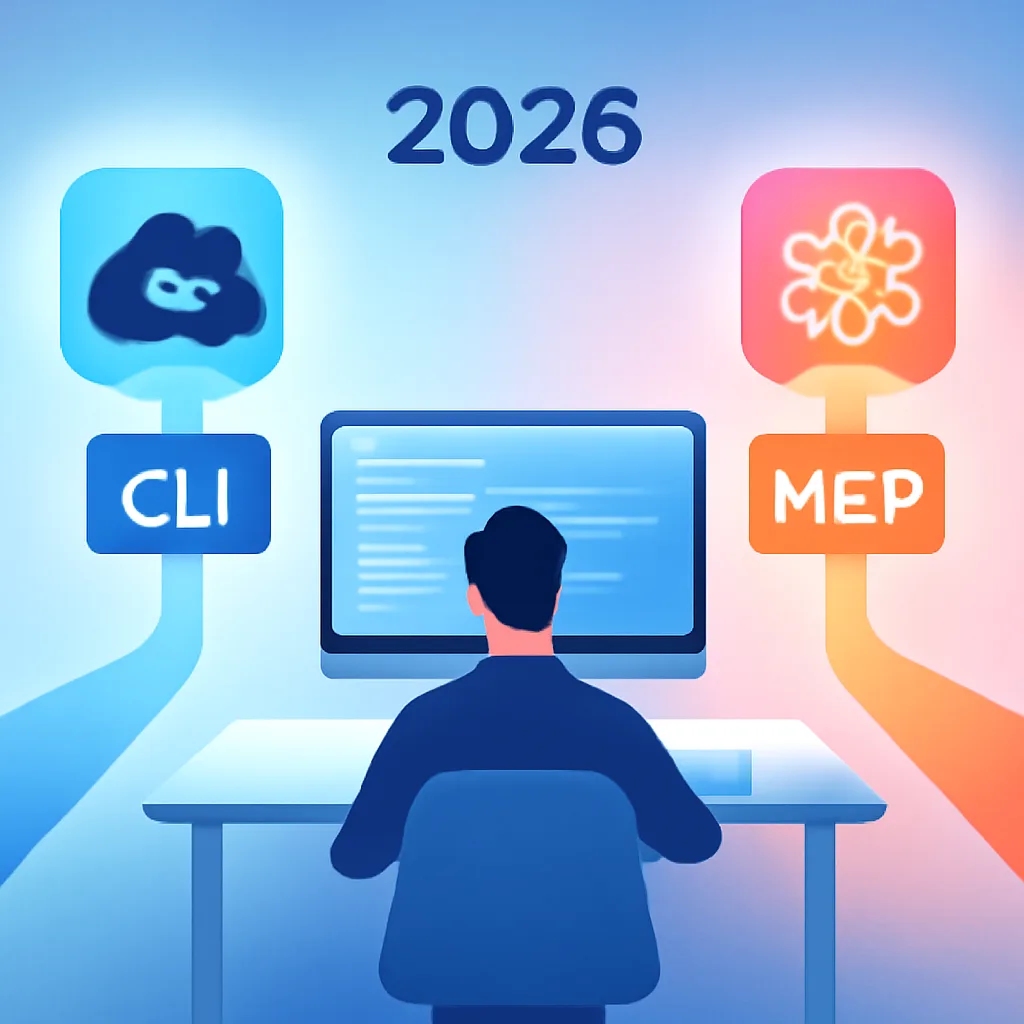
AI Agents in 2026: Choosing Between CLI and MCP for Optimal Tool Selection
In 2026, the landscape of AI agents has evolved significantly, particularly in how they select and utilize tools. This article dives into the critical differences between Command Line Interface (CLI) and Model Context Protocol (MCP) approaches, providing insights into which method is best suited for different user needs. Understanding these differences can empower businesses to optimize their workflows and enhance productivity.
The Rise of AI Agents and Tool Selection
As artificial intelligence continues to permeate various industries, AI agents are becoming pivotal in automating tasks and making informed decisions. The ability of these agents to select the right tools is crucial for maximizing efficiency and accuracy. Martin Keen, a Master Inventor at IBM, has highlighted the distinctions between CLI and MCP in recent discussions, emphasizing their implications for tool selection and operational workflows.
Understanding CLI: Direct and Command-Based
The Command Line Interface (CLI) allows AI agents to execute commands directly, similar to how developers interact with a terminal. This method is straightforward but can lead to ambiguity if the commands are not well-defined. Common CLI commands include 'ls', 'cat', and 'curl', which provide basic functionalities but may not fully leverage the potential of AI-driven decision-making. While CLI is beneficial for experienced users who understand the commands, it poses challenges for less technical operators (source 1).
The Advantages of MCP: Structured and Descriptive
In contrast, the Model Context Protocol (MCP) offers a more structured approach to tool selection. Each MCP tool comes with a clear name, description, and schema that defines expected inputs and outputs. This structured information reduces ambiguity and enhances the accuracy of tool utilization. For AI agents, this means better alignment with task requirements, leading to improved outcomes. Keen argues that MCP's detailed specifications enable AI agents to select tools more effectively, making it an ideal choice for businesses looking to optimize their workflows (source 1).
Pricing and Accessibility: Which is More Cost-Effective?
When selecting between CLI and MCP, pricing can be a significant factor. CLI tools often have lower upfront costs, as they may rely on open-source platforms or existing infrastructure. However, the potential for errors and inefficiencies can lead to increased costs in the long run. On the other hand, MCP tools, while possibly more expensive upfront due to their structured nature, can save businesses money by reducing errors and increasing productivity. Organizations must weigh the initial investment against potential long-term savings when deciding which approach to adopt (source 1).
Workflow Impact: Efficiency vs. Complexity
The choice between CLI and MCP also significantly impacts workflow efficiency. CLI may streamline processes for tech-savvy teams but can introduce complexity for non-technical users. In contrast, MCP's structured approach can simplify interactions for all users, making it easier to onboard new team members and reduce training time. This democratization of tool usage can enhance overall productivity and facilitate smoother collaboration across departments (source 1).
Next Steps: Choosing the Right Tool for Your Team
For businesses considering the implementation of AI agents, evaluating the specific needs of your team is crucial. If your team comprises skilled developers who can leverage CLI effectively, this approach may still hold value. However, for organizations seeking to empower a broader range of users, adopting MCP tools could enhance overall efficiency and reduce the learning curve.
Key Takeaways:
- CLI offers direct command execution but can lead to ambiguity.
- MCP provides a structured approach that enhances accuracy and usability.
- Pricing considerations should factor in potential long-term savings from reduced errors.
- Workflow efficiency is impacted by the technical skill level of users.
- Assess team capabilities when deciding between CLI and MCP.
Conclusion: The Future of AI Tool Selection
As we move forward in 2026, the choice between CLI and MCP will be pivotal for organizations looking to harness the power of AI agents. By understanding the strengths and weaknesses of each approach, businesses can make informed decisions that align with their operational goals. Continuing to monitor advancements in AI tool selection will be essential for maintaining a competitive edge in an increasingly automated world.
Sources
- AI Agents: CLI vs. MCP for Tool Selection
- AI 功能與您的網站 | Google 搜尋中心 | Documentation | Google for Developers
Source Snapshot
| Source | Main angle | URL |
|---|---|---|
| 1 | AI Agents: CLI vs. MCP for Tool Selection | https://www.startuphub.ai/ai-news/artificial-intelligence/2026/ai-agents-cli-vs-mcp-for-tool-selection |
| 2 | AI 功能與您的網站 / Google 搜尋中心 / Documentation / Google for Developers | https://developers.google.com/search/docs/appearance/ai-features |
📰 Sources
This article aggregates 2 sources. Click (source N) inline to jump to the matching entry.
- AI Agents: CLI vs. MCP for Tool Selection www.startuphub.ai
- AI 功能與您的網站 | Google 搜尋中心 | Documentation | Google for Developers developers.google.com