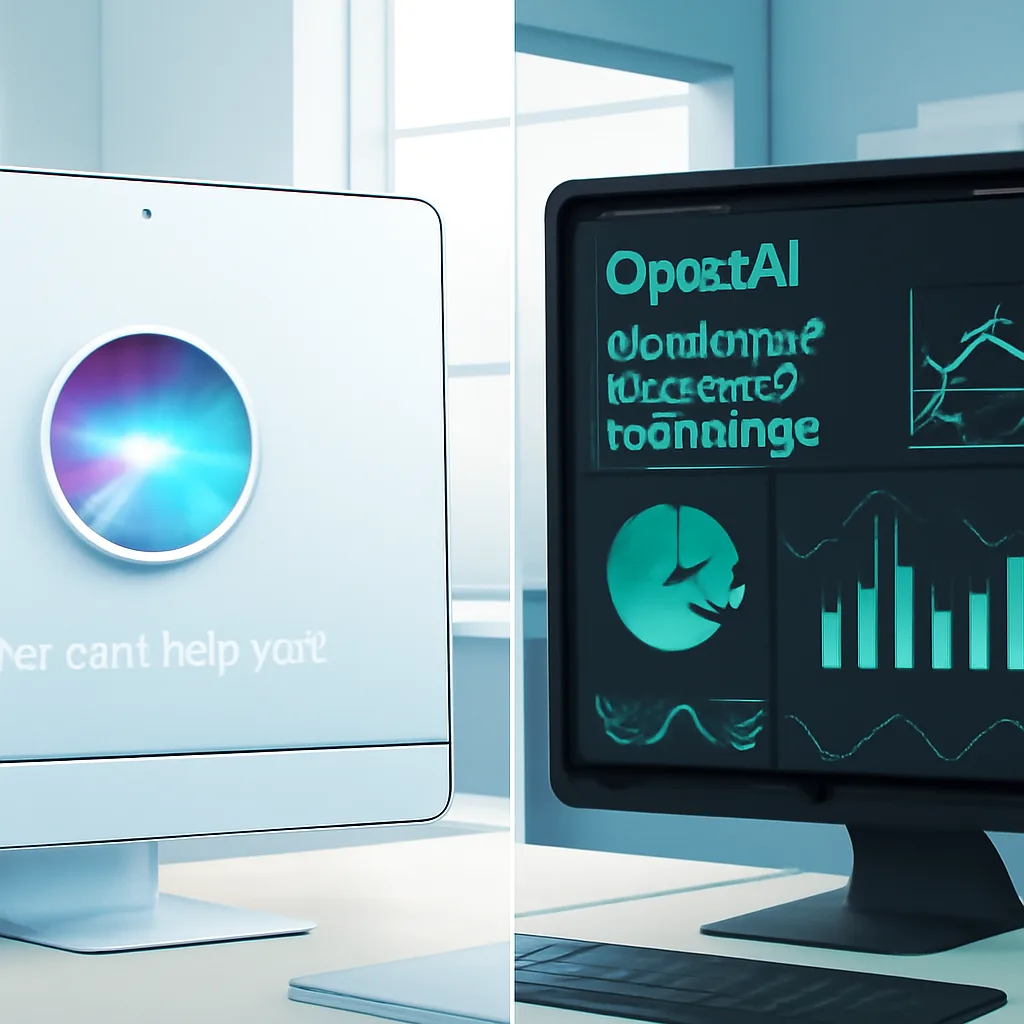
Apple's Siri AI vs. OpenAI's Economic Research Exchange: Who Will Shape AI's Future in 2026?
Introduction
As 2026 unfolds, significant developments in the AI landscape are capturing attention. Apple has launched an enhanced Siri AI, aiming to redefine user interaction across its devices, while OpenAI has initiated an Economic Research Exchange to study AI's economic impacts. For users and businesses alike, understanding these changes is crucial for navigating the evolving AI ecosystem and optimizing productivity.
Apple's Siri AI: A Measured Approach to AI Integration
Apple has been criticized for its slow entry into the AI race, but recent developments suggest a strategic pivot. The company unveiled its new Siri AI, enhanced through a partnership with Google Gemini, which aims to integrate user-friendly features across Apple devices. This update allows Siri to pull information from deep within user communications, offering contextual suggestions and a seamless experience across devices (source 1).
One of the key benefits of the updated Siri is its ability to provide relevant information quickly, leveraging real-time data from the web. This positions Apple as a consumer-friendly AI provider, focusing on user experience rather than racing ahead without clear objectives. Apple's approach contrasts with competitors who have been heavily investing in AI without clear market direction, suggesting that a more cautious strategy may yield long-term success (source 1).
The release of the new Siri AI features, although still in beta, is expected to enhance user engagement with Apple devices. This could lead to increased loyalty among existing users and attract new customers, potentially boosting iPhone sales further. Users should watch for these updates and consider how they can leverage Siri's new capabilities to enhance their daily workflows.
OpenAI's Economic Research Exchange: Aiming for Rigorous Insights
On the other side of the AI spectrum, OpenAI has launched the Economic Research Exchange, a platform designed to support empirical research on AI's impact on the economy. This initiative invites researchers to explore how AI technologies are reshaping labor markets, business operations, and economic structures (source 2).
The Economic Research Exchange aims to produce credible evidence regarding AI's effects on various sectors. Researchers are encouraged to submit proposals that emphasize data governance and user privacy, ensuring that the insights generated are not only rigorous but also responsible. This initiative is particularly timely, as businesses and policymakers seek to understand the implications of AI adoption amidst rapid technological change (source 2).
For those interested in the economic dimensions of AI, this platform represents a valuable opportunity to engage with leading-edge research. Researchers with expertise in fields such as labor economics, productivity, and public finance are invited to apply, with a submission deadline of July 5, 2026. This initiative could yield insights that inform both policy and business strategy in the coming years.
Comparative Insights: Apple vs. OpenAI
While Apple's approach focuses on enhancing user experience through AI integration, OpenAI's initiative targets the broader economic implications of AI technologies. This contrast highlights two key areas of AI development:
- User-Centric AI: Apple's Siri AI prioritizes consumer interaction and usability, aiming to integrate AI seamlessly into daily life. This could lead to increased productivity for users who leverage these new features effectively.
- Research-Driven AI: OpenAI's Economic Research Exchange emphasizes empirical research to understand AI's economic impacts. This could shape future policies and business practices as stakeholders gain deeper insights into AI's role in the economy.
Both strategies are crucial in their own right, as they address different facets of the AI landscape. Users and businesses should consider how these developments might influence their own AI adoption strategies.
Key Takeaways
- Apple's Siri AI enhancements aim to provide a more user-friendly experience, potentially increasing device engagement.
- OpenAI's Economic Research Exchange seeks to generate rigorous research on AI's economic impacts, inviting proposals from qualified researchers.
- Understanding both user-focused and research-driven AI initiatives is essential for businesses and individuals navigating the evolving landscape.
Conclusion
As 2026 progresses, the developments from Apple and OpenAI represent significant steps in the AI domain. For users, Apple's Siri AI offers promising tools to enhance productivity and engagement with technology. For researchers and policymakers, OpenAI's Economic Research Exchange provides a platform for investigating the broader implications of AI on the economy. Staying informed about these initiatives will be crucial for maximizing the potential benefits of AI in both personal and professional contexts. Users should keep an eye on upcoming features from Apple while researchers should consider participating in OpenAI's platform to contribute to the understanding of AI's transformative effects.
Sources
- TechCrunch - Why Apple's slow-and-steady AI bet is starting to look pretty smart
- OpenAI - Introducing the OpenAI Economic Research Exchange
Related reading
📰 Sources
This article aggregates 2 sources. Click (source N) inline to jump to the matching entry.