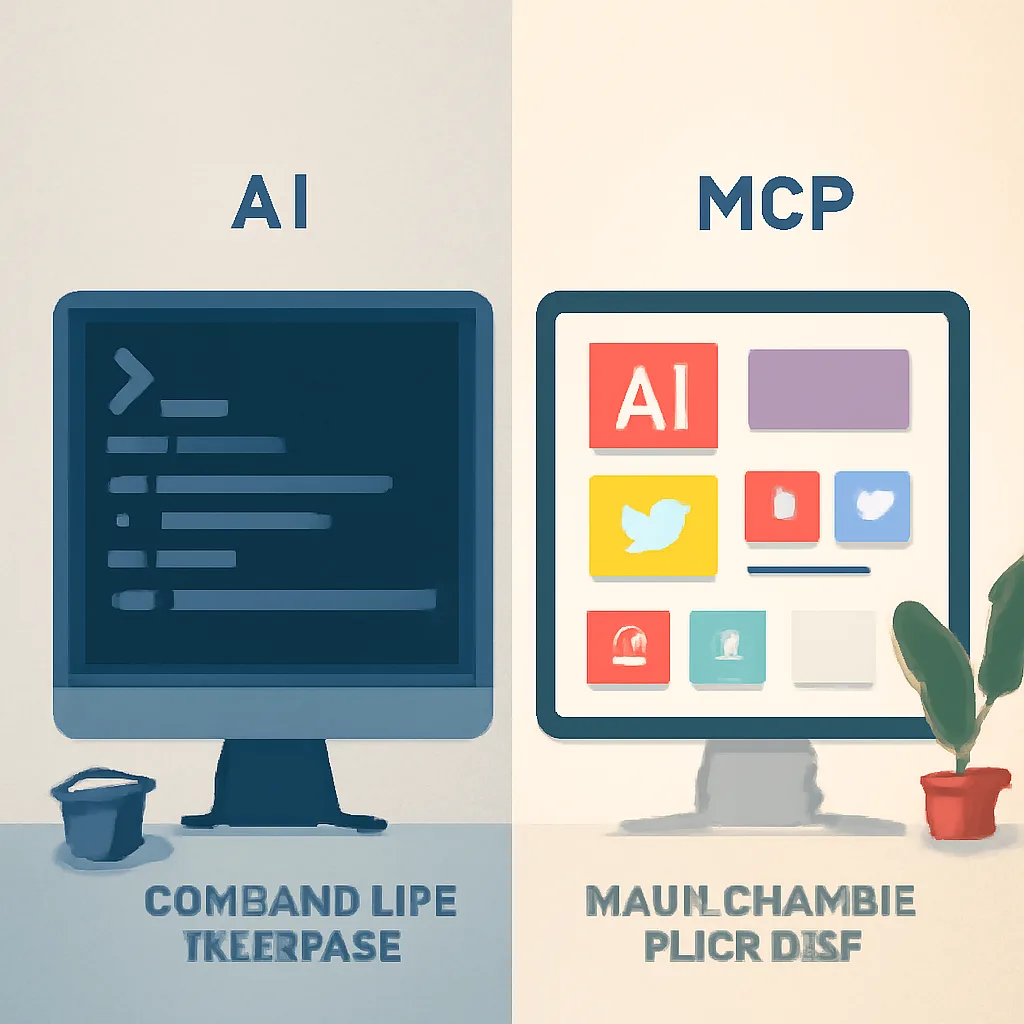
CLI vs MCP for AI Agents: Which One Enhances Your Workflow in 2026?
In the rapidly evolving landscape of AI tools, the debate between Command Line Interface (CLI) tools and Model Context Protocol (MCP) has taken center stage, especially as we approach 2026. This discussion is crucial for operators seeking to optimize their workflows and leverage AI agents effectively. Readers should care because the choice between CLI and MCP can significantly impact automation efficiency, cost-effectiveness, and the overall productivity of business operations.
Understanding CLI and MCP
CLI tools have long been favored for their efficiency and simplicity in executing tasks. With the ability to handle commands with minimal overhead, they often outperform MCPs in speed and resource usage. For instance, a recent analysis highlighted that CLI tools can perform tasks up to 275 times faster than MCPs due to their streamlined processes (source 1). This efficiency is particularly advantageous in environments where speed is critical, such as in data processing or in real-time applications.
On the other hand, MCPs serve a distinct purpose by providing a framework for integrating various AI tools with standardized protocols. They excel in scenarios that require robust security features, such as OAuth for authentication and detailed audit trails (source 1). This makes MCPs essential for enterprises that prioritize governance and compliance, especially when handling sensitive data.
The Efficiency of CLI Tools
The growing preference for CLI tools in AI automation can be attributed to their inherent advantages. By allowing AI agents to execute shell commands directly, operators can create automation workflows that are both lightweight and powerful. This method eliminates the complexities associated with using specialized protocols, as demonstrated by Tools4AI, which facilitates the development of CLI tool-calling agents (source 2).
CLI tools also benefit from a long history of development, which means they are well-understood and widely supported. This familiarity aids in faster onboarding and reduces the learning curve for teams looking to implement AI solutions. As AI agents increasingly automate business tasks—from invoicing to data management—the need for efficient tool integration becomes paramount.
The Role of MCP in Enterprise Settings
While CLI tools dominate in terms of speed, MCPs maintain their relevance in enterprise environments. They provide a structured approach to integrating various AI systems, ensuring that security protocols are followed. For businesses that require multi-tenant SaaS solutions with granular access controls, MCPs offer the necessary framework to manage these complexities effectively (source 1).
Moreover, MCPs are designed for environments where collaboration among different AI systems is essential. They allow tools like Claude, GPT, and Gemini to share resources and workflows seamlessly, which can enhance productivity across teams. In this context, while CLI tools may be faster, MCPs provide the necessary governance that large organizations need to operate securely.
Choosing Between CLI and MCP
The decision to use CLI tools or MCPs should be based on specific organizational needs. Here are some guidelines to help make this choice:
- For Speed and Simplicity: If your primary goal is to automate tasks quickly and efficiently, opt for CLI tools. They are ideal for environments where time is of the essence and where complex integrations are not required.
- For Security and Governance: When working with sensitive data or in regulated industries, prioritize MCPs. They offer the necessary security features and compliance measures that protect your organization while allowing for effective AI integration.
- Hybrid Approach: Many organizations may benefit from a hybrid approach, utilizing CLI tools for rapid automation and MCPs for governance. This strategy allows teams to leverage the strengths of both tools while mitigating their weaknesses.
Key Takeaways
- CLI tools can execute tasks significantly faster than MCPs, making them ideal for quick automation needs.
- MCPs are essential for enterprises requiring strict security protocols and compliance measures.
- Organizations should evaluate their specific needs to determine whether to prioritize CLI tools, MCPs, or a combination of both.
Conclusion
As we move further into 2026, the CLI vs MCP debate will continue to shape the landscape of AI tools. Operators must assess their unique requirements and choose the tools that align with their workflows and governance needs. By understanding the strengths and limitations of each approach, businesses can enhance their productivity and streamline their operations effectively. Keep an eye on emerging trends and technologies that may influence this debate as the AI field continues to evolve.
Sources
Source Snapshot
| Source | Main angle | URL |
|---|---|---|
| 1 | 关于 MCP 与 CLI 的真相 | https://www.reddit.com/r/AI_Agents/comments/1rjtp3q/the_truth_about_mcp_vs_cli/?tl=zh-hans |
| 2 | CLI vs MCP for AI Agents: How to Build a CLI Tool-Calling Agent! | https://medium.com/@visrow/cli-vs-mcp-for-ai-agents-how-to-build-a-cli-tool-calling-agent-d3e7bb8252c2 |
📰 Sources
This article aggregates 2 sources. Click (source N) inline to jump to the matching entry.
- 关于 MCP 与 CLI 的真相 www.reddit.com
- CLI vs MCP for AI Agents: How to Build a CLI Tool-Calling Agent! medium.com